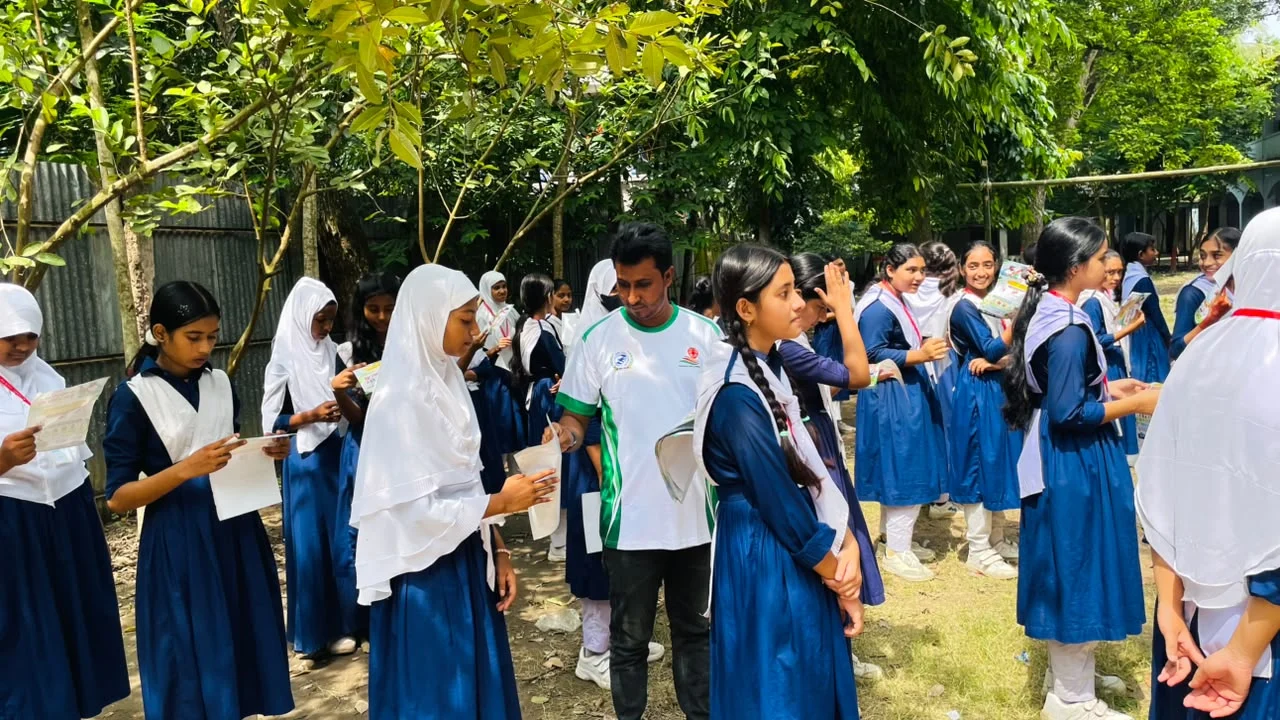

Children’s Rights: Protecting Every Child’s Dignity, Equality, and Future
International Human Rights Organization World Society (IHRO World Society)
Introduction
Every child is born with inherent dignity and human rights.
Children have the right to survive, develop, learn, participate, be protected from violence and exploitation, and grow up in an environment where their dignity and potential are respected. Protecting these rights is not an act of charity—it is a fundamental responsibility of families, communities, governments, institutions, civil society, and society as a whole.
The Universal Declaration of Human Rights (UDHR) recognizes that all human beings are born free and equal in dignity and rights (United Nations, 1948). Because children are human beings and rights-holders, all fundamental human rights apply to them, while their particular stage of development requires additional protection and support.
The United Nations Convention on the Rights of the Child (CRC) provides the principal international framework for children’s rights. It establishes a comprehensive set of civil, political, economic, social, and cultural rights and emphasizes that decisions concerning children must take their best interests into account (United Nations, 1989).
For the International Human Rights Organization World Society (IHRO World Society), children’s rights are an essential part of human rights, social justice, equality, peace, and sustainable development.
What Are Children’s Rights?
Children’s rights are the human rights specifically recognized and protected for every child.
The Convention on the Rights of the Child is based on four fundamental principles:
- Non-discrimination
- The best interests of the child
- The right to life, survival, and development
- Respect for the views of the child
These principles provide a foundation for creating societies where children are protected, included, listened to, and given opportunities to develop their full potential.
Children should never be discriminated against because of gender, disability, poverty, family background, nationality, ethnicity, religion, location, or any other status.
Children Are Rights-Holders
Children should not be viewed merely as passive beneficiaries of welfare or development programs.
They are rights-holders, individuals, learners, participants, and members of society.
Respecting children’s rights means recognizing their dignity and creating appropriate opportunities for them to express their views on matters affecting their lives.
Children’s participation does not mean placing adult responsibilities on children. Rather, it means listening to children in ways appropriate to their age and maturity and ensuring that their perspectives are taken seriously.
The voices of children and young people can help governments, organizations, schools, and communities better understand the challenges affecting them.
Recent child and youth consultations in Bangladesh demonstrate the importance of giving children opportunities to identify priorities concerning education, health, safety, climate change, disability inclusion, child marriage, and child labour.
The Right to Life, Survival, and Development
Every child has the right to survive and develop to their full potential.
This requires more than preventing death. Children need adequate nutrition, healthcare, education, protection, emotional support, safe environments, and opportunities to learn and participate.
Child development is interconnected. Poor nutrition can affect learning. Violence can affect mental health. Poverty can restrict educational opportunities. Discrimination can limit participation.
Therefore, protecting children’s rights requires a holistic approach that addresses the different dimensions of childhood.
The Right to Education
Education is one of the most powerful pathways to empowerment and social transformation.
Every child should have access to inclusive, equitable, quality education without discrimination.
Education enables children to develop knowledge, skills, confidence, critical thinking, creativity, and opportunities for future employment and participation in society.
However, access to education alone is not enough. Children need safe schools, qualified teachers, accessible learning materials, inclusive environments, protection from violence, and support for children facing poverty, disability, displacement, or other barriers.
In Bangladesh, recent evidence continues to highlight gaps in learning and education outcomes, demonstrating the need to place children’s learning and development at the center of public policy and investment.
The Right to Health and Nutrition
Every child has the right to the highest attainable standard of health.
Child rights therefore include access to:
- Primary healthcare.
- Immunization.
- Adequate nutrition.
- Safe drinking water.
- Sanitation and hygiene.
- Maternal and newborn care.
- Mental-health and psychosocial support.
- Health information.
- Disability-related services and support.
Nutrition is particularly important during early childhood because nutritional deprivation can affect physical growth, cognitive development, learning, and long-term well-being.
Protecting children’s health requires cooperation among families, healthcare professionals, communities, governments, schools, and civil society organizations.
Protection from Violence, Abuse, and Neglect
No child should experience violence, abuse, exploitation, or neglect.
Children can face physical punishment, psychological aggression, sexual abuse, bullying, trafficking, exploitation, and other forms of violence in homes, schools, communities, workplaces, and online environments.
Bangladesh continues to face serious child-protection challenges. UNICEF’s current evidence reports widespread violent discipline and significant risks related to child labour, child marriage, and other forms of exploitation.
Protecting children requires:
Prevention → Early Identification → Reporting → Referral → Protection → Recovery → Justice
A child who experiences abuse must be able to access appropriate support, protection, healthcare, psychosocial services, and child-sensitive justice.
The Right to Protection from Child Labour
Children should be able to learn, play, develop, and prepare for their future rather than being exposed to hazardous or exploitative work.
Child labour can interfere with education, affect health and development, and expose children to dangerous environments.
Bangladesh has made progress in reducing child labour, but it remains a significant concern, particularly where poverty, school exclusion, and economic vulnerability intersect.
Effective action should address the underlying causes of child labour through:
- Quality and accessible education.
- Social protection.
- Family livelihood support.
- Enforcement of child-labour laws.
- Community awareness.
- Safe referral and protection services.
- Skills development for adults and young people of legal working age.
Children must never be treated as cheap labour.
Ending Child Marriage
Child marriage is a serious violation of children’s rights and a major barrier to education, health, equality, and development.
Early marriage can interrupt education, limit economic opportunities, increase vulnerability to violence, and create significant health risks for girls.
Bangladesh continues to face a high burden of child marriage. Recent national child-rights initiatives have identified ending child marriage as a key priority and called for stronger legal, policy, social, and community action.
Ending child marriage requires:
- Keeping girls in school.
- Strengthening birth registration.
- Supporting vulnerable families.
- Community awareness.
- Changing harmful social norms.
- Strengthening implementation of laws.
- Adolescent-friendly health and protection services.
- Meaningful participation of girls and young people.
Every child deserves the freedom to grow, learn, and decide their future at the appropriate age.
The Right to Identity and Birth Registration
Every child has the right to a name, nationality, and legal identity.
Birth registration is a fundamental child-protection mechanism. It helps establish a child’s legal identity and can support access to healthcare, education, social protection, and justice.
It can also help protect children from child marriage, child labour, trafficking, and other forms of exploitation by establishing reliable evidence of age.
Ensuring universal birth registration should therefore be treated as both an administrative priority and a fundamental child-rights commitment.
Every child should be visible before the law.
Children with Disabilities
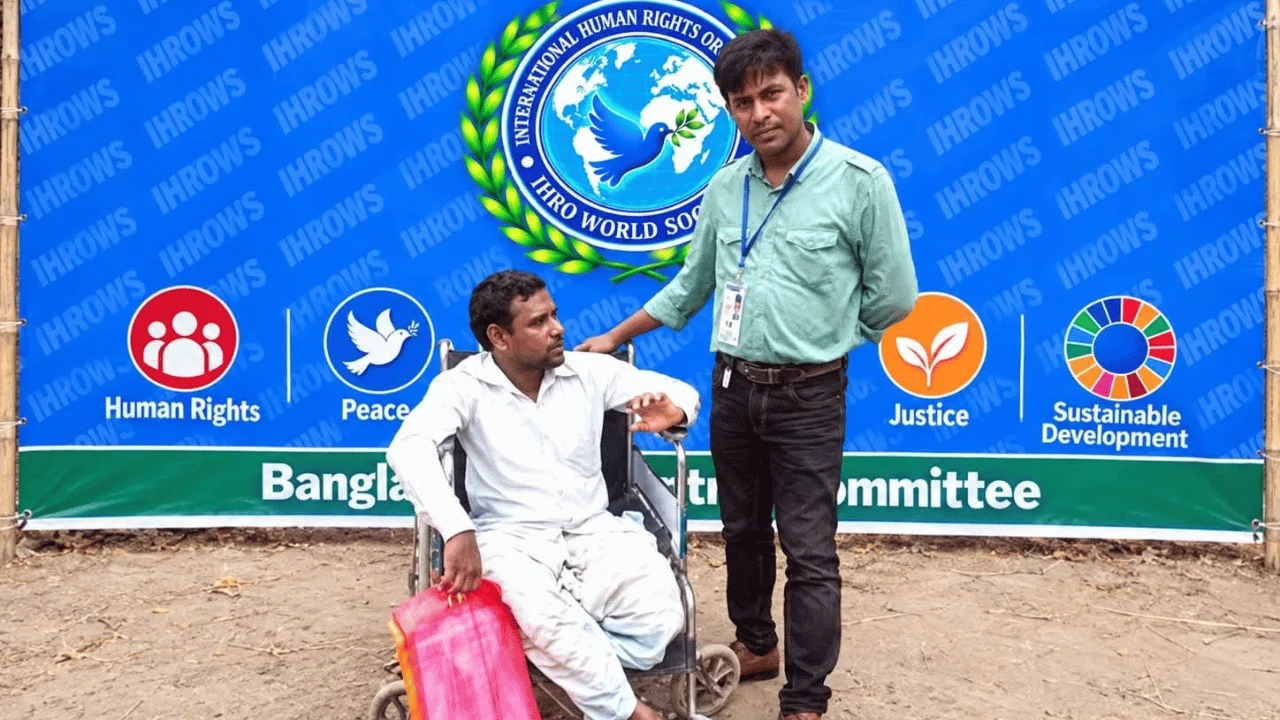
Children with disabilities have the same human rights as every other child.
Yet they can experience discrimination, stigma, exclusion, inaccessible schools, limited services, and social isolation.
Inclusive child-rights programs should ensure that children with disabilities can access:
- Inclusive education.
- Healthcare.
- Rehabilitation and support services.
- Accessible information.
- Safe public spaces.
- Protection services.
- Justice.
- Recreation and cultural activities.
- Opportunities to participate in decisions affecting their lives.
A society cannot claim to be inclusive if children with disabilities remain excluded.
Digital Rights and Online Safety
Digital technology has created enormous opportunities for children to learn, communicate, create, and participate.
At the same time, children can face online risks including cyberbullying, exploitation, grooming, harmful content, privacy violations, and abuse.
Children therefore need both digital opportunities and digital protection.
Parents, schools, technology providers, governments, civil society organizations, and children themselves all have roles to play in creating safer digital environments.
Digital child protection should include:
- Digital literacy.
- Online safety education.
- Privacy protection.
- Responsible technology use.
- Cyberbullying prevention.
- Child-friendly reporting mechanisms.
- Protection against online exploitation.
- Appropriate parental and educational guidance.
Children should be able to benefit from technology without compromising their dignity, privacy, or safety.
Children’s Rights in Bangladesh
Bangladesh has made important progress in advancing children’s rights, including through national laws, policies, social programs, education initiatives, child-protection systems, and international commitments.
However, significant challenges remain.
Recent evidence from the Bangladesh Multiple Indicator Cluster Survey (MICS) 2025 highlights continuing concerns involving child nutrition, birth registration, violent discipline, child labour, child marriage, education, and other dimensions of children’s well-being.
UNICEF’s 2025 Child Rights Manifesto also identified key priorities including primary healthcare, nutrition, ending child marriage, eliminating hazardous child labour, reducing violence, strengthening birth registration, inclusive services, climate resilience, and social inclusion.
These challenges demonstrate that children’s rights must remain a national development priority.
Children must be at the heart of policies, budgets, services, and development planning.
Child-Friendly Justice
Children who come into contact with the justice system require special protection and support.
A child-friendly justice system should prioritize:
- The best interests of the child.
- Dignity and respect.
- Privacy.
- Legal assistance.
- Appropriate participation.
- Rehabilitation.
- Reintegration.
- Alternatives to detention where appropriate.
Bangladesh has taken steps toward strengthening child-friendly justice, including the establishment of separate Children’s Courts, which UNICEF described as an important step toward a justice system focused on children’s rights and rehabilitation.
Justice should protect children rather than deepen their vulnerability.
Climate Change and Children’s Rights
Climate change is increasingly affecting children’s lives and futures.
Floods, cyclones, heatwaves, displacement, water insecurity, environmental degradation, and other climate-related risks can disrupt education, healthcare, nutrition, housing, and family livelihoods.
Children are often among those most vulnerable to the consequences of climate change despite having contributed least to the problem.
Climate policies should therefore recognize children as both rights-holders and participants in climate action.
Building climate-resilient schools, healthcare systems, communities, and social-protection mechanisms is essential for protecting children’s rights.
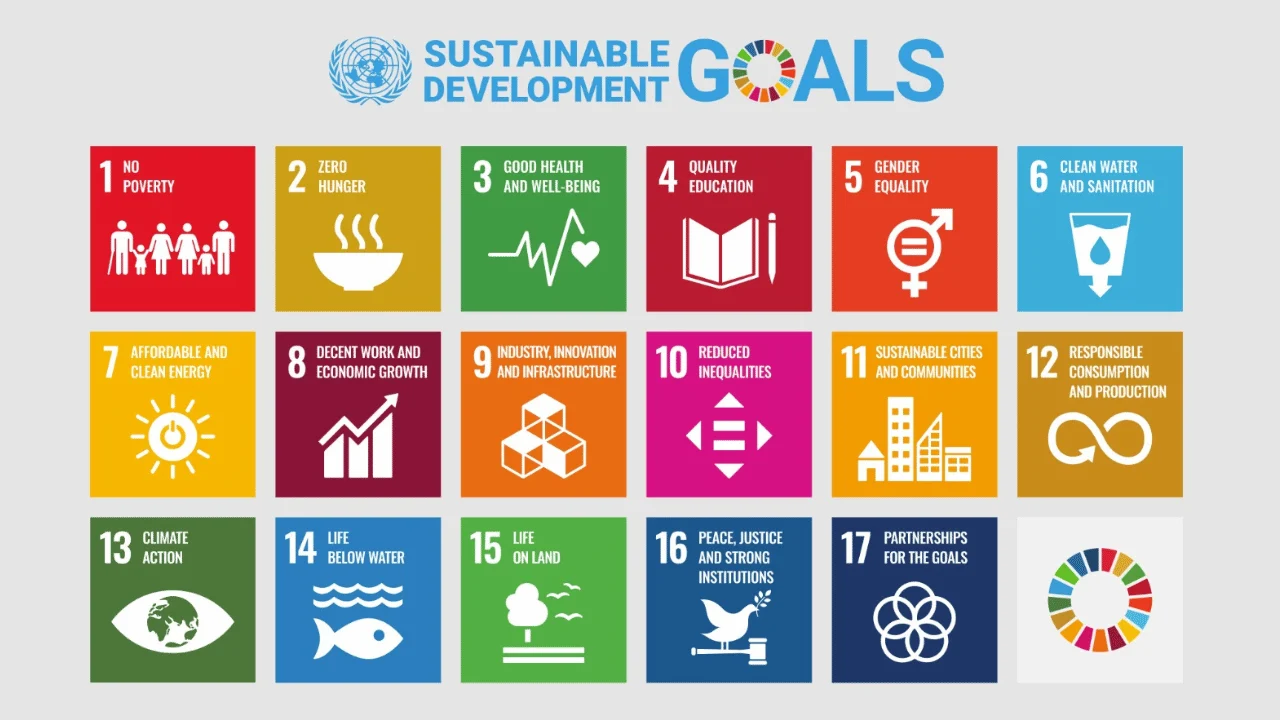
Children’s Rights and the Sustainable Development Goals
Children’s rights are closely connected with the United Nations Sustainable Development Goals (SDGs).
SDG 1 – No Poverty
Reducing poverty and strengthening social protection can address many of the conditions that place children at risk.
SDG 2 – Zero Hunger
Nutrition and food security are essential for children’s survival, growth, and development.
SDG 3 – Good Health and Well-Being
Every child needs access to healthcare, nutrition, mental-health support, and safe environments.
SDG 4 – Quality Education
Inclusive and quality education is a fundamental pathway for children’s development and future opportunities.
SDG 5 – Gender Equality
Ending child marriage, violence against girls, and discrimination is essential for gender equality.
SDG 8 – Decent Work and Economic Growth
Target 8.7 calls for effective measures to eradicate forced labour, end modern slavery and human trafficking, and eliminate the worst forms of child labour.
SDG 10 – Reduced Inequalities
Children from marginalized and vulnerable groups must have equal access to opportunities and services.
SDG 16 – Peace, Justice and Strong Institutions
Target 16.2 specifically calls for ending abuse, exploitation, trafficking, and all forms of violence and torture against children.
SDG 17 – Partnerships for the Goals
Protecting children’s rights requires strong partnerships among governments, civil society, communities, international organizations, businesses, educators, families, and young people.
The SDGs therefore provide an important framework for translating children’s rights into measurable development action.
The Role of IHRO World Society
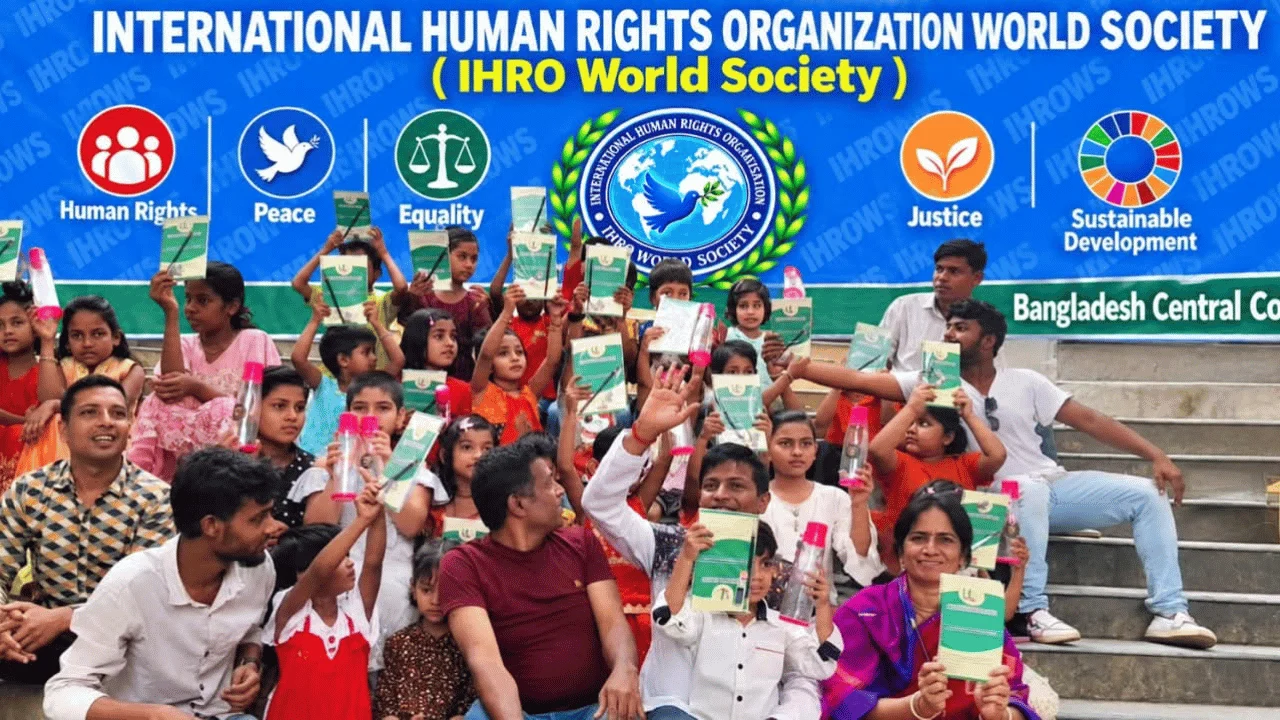
The International Human Rights Organisation World Society (IHRO World Society) recognizes children’s rights as an integral part of its commitment to human rights, equality, justice, peace, and sustainable development.
IHRO World Society seeks to promote children’s rights through:
- Child-rights awareness and education.
- Human-rights education.
- Community advocacy.
- Child-protection awareness.
- Prevention of violence and exploitation.
- Awareness against child marriage and child labour.
- Promotion of birth registration.
- Inclusive education.
- Disability inclusion.
- Youth and volunteer engagement.
- Digital safety awareness.
- Community-based child protection.
- Partnership and networking.
- Promotion of child-sensitive development.
- Support for the Sustainable Development Goals.
Our approach is guided by a simple principle:
“Every Child Matters. Every Child Has Rights. Every Child Deserves a Future.”
IHRO World Society believes that protecting children requires both strong systems and strong communities.
The Role of Families and Communities
Child rights protection begins close to where children live.
Parents and caregivers have a fundamental role in providing care, protection, guidance, education, and emotional support.
Schools, teachers, community leaders, volunteers, social workers, healthcare providers, civil society organizations, and local institutions also have important responsibilities.
Communities should create environments where children:
- Feel safe.
- Are treated with respect.
- Can express their views.
- Can access education and healthcare.
- Are protected from violence.
- Can report concerns.
- Are included regardless of disability or background.
Protecting children is not the responsibility of one institution alone.
It is a shared responsibility.
Children’s Participation: Listen to Children
Children have valuable perspectives on the issues affecting their lives.
Listening to children can help identify problems that adults may overlook.
Children and young people should therefore have age-appropriate opportunities to participate in:
- School decisions.
- Community activities.
- Environmental initiatives.
- Youth programs.
- Human-rights education.
- Policy consultations.
- Climate action.
- Community development.
Participation should be meaningful, safe, voluntary, and appropriate to children’s age and maturity.
Nothing about children should be decided without listening to children.
Partnerships for Children’s Rights
No single organization can protect every child’s rights alone.
Sustainable progress requires cooperation among:
Government + Civil Society + Families + Schools + Communities + Children + Businesses + International Partners
Partnerships can strengthen:
- Resources.
- Knowledge.
- Research.
- Advocacy.
- Child-protection services.
- Education.
- Health systems.
- Community resilience.
- Accountability.
This is closely aligned with SDG 17: Partnerships for the Goals.
A Call to Action
Children’s rights require action—not only words.
Governments must prioritize children in laws, policies, budgets, and public services.
Schools must create safe and inclusive learning environments.
Families must provide care, protection, and positive guidance.
Communities must challenge violence, discrimination, child marriage, and exploitation.
Civil society organizations must advocate, educate, monitor, and support communities.
Businesses must ensure that children are not exploited through workplaces or supply chains.
And adults must listen to children and respect their voices.
We must protect childhood before childhood is lost.
Conclusion
Children’s rights are human rights.
Every child deserves to live with dignity, safety, equality, love, opportunity, and hope.
A child should not have to choose between education and labour, safety and violence, childhood and early marriage, inclusion and discrimination, or opportunity and poverty.
The responsibility of society is to create conditions in which every child can survive, develop, learn, participate, and reach their full potential.
For IHRO World Society, the commitment is clear:
Protect Every Child. Respect Every Right. Listen to Every Voice. Leave No Child Behind.
When we protect children’s rights today, we build a more peaceful, equal, resilient, and sustainable world for tomorrow.
“Every Child Matters. Every Right Matters. Every Future Matters.”
References
United Nations. (1948). Universal Declaration of Human Rights. United Nations.
United Nations. (1989). Convention on the Rights of the Child. United Nations.
United Nations. (2015). Transforming our world: The 2030 Agenda for Sustainable Development. United Nations.
UNICEF. (2019). Birth registration for every child by 2030: Are we on track? United Nations Children’s Fund.
UNICEF Bangladesh. (2025). Bangladesh Multiple Indicator Cluster Survey 2025: Preliminary report. Bangladesh Bureau of Statistics & UNICEF Bangladesh.
UNICEF Bangladesh. (2025). Child Rights Manifesto: A promise to every child in Bangladesh. UNICEF Bangladesh.
UNICEF Bangladesh. (2026). Data on the situation of children in Bangladesh. UNICEF Bangladesh.
UNICEF Bangladesh. (2026). Child protection: Keeping children safe from violence, abuse, exploitation and neglect. UNICEF Bangladesh.